Logic

  • |

    How Axioms Determine the Foundation of Mathematical Reasoning

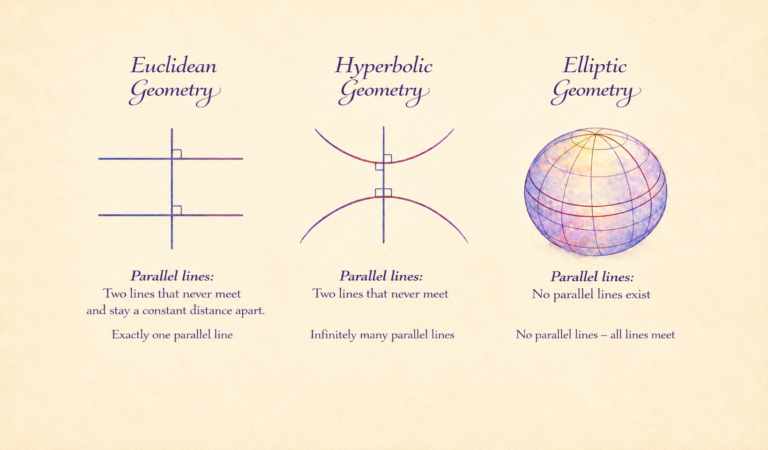
    This article explores Euclid’s axioms, or Common Notions, and the role they play in forming the foundation of mathematical reasoning. Before geometry can move with certainty, it must rest on truths that are accepted as self-evident. But this raises a question beyond mathematics: what are the axioms beneath our own thinking? What hidden assumptions determine the way we reason, choose and meet the world?
  • Logical Operators in Mathematics

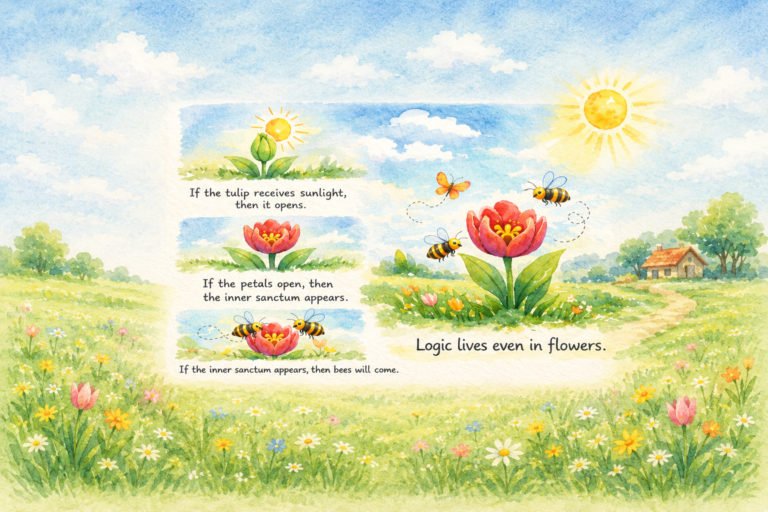
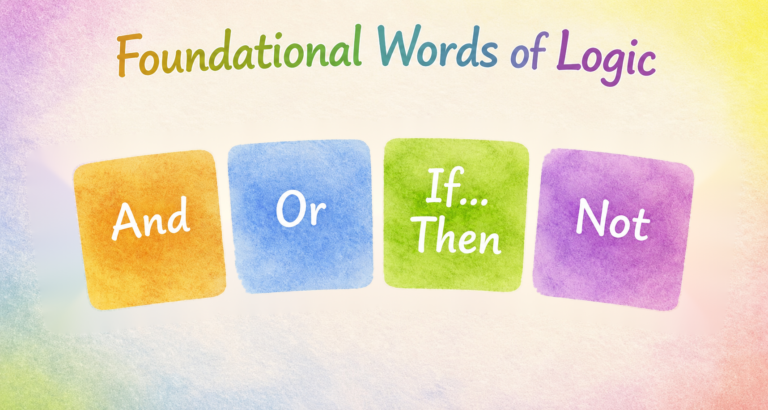
    This article explores logical operators and the role they play in mathematical thinking. Words such as and, or, not, if and then may seem ordinary, but they carry powerful relationships between ideas. They help us combine statements, separate possibilities, create conditions and recognise when something follows from something else. In mathematics, these small words become essential tools for reasoning clearly.

  • Language and Formal Mathematical Reasoning

    This article explores the relationship between language and formal mathematical reasoning. Before the mind can follow a proof, interpret a definition or understand a symbolic statement, it must first learn how ideas relate through language. Words such as if, then, because, therefore, and, or and not prepare the ground for logical structure. They help us recognise conditions, consequences, distinctions and relationships. In this way, language becomes one of the first bridges into formal mathematical thought.

  • |

    Pathways That Formed Our Way of Knowing

    This article explores the long pathways that formed mathematical thinking, from the ancient recognition of order in the world to the later development of symbol, abstraction, logic and proof. Mathematical thought grew from the body’s encounter with rhythm, pattern, movement, language and form. Across cultures and ages, human beings slowly learned to recognise structure, refine meaning, discipline thought and question the limits of certainty. Seen in this light, mathematics becomes part of a much older story: the story of how the human mind learned to perceive the world with greater clarity.