
Mat and the Peach Pit
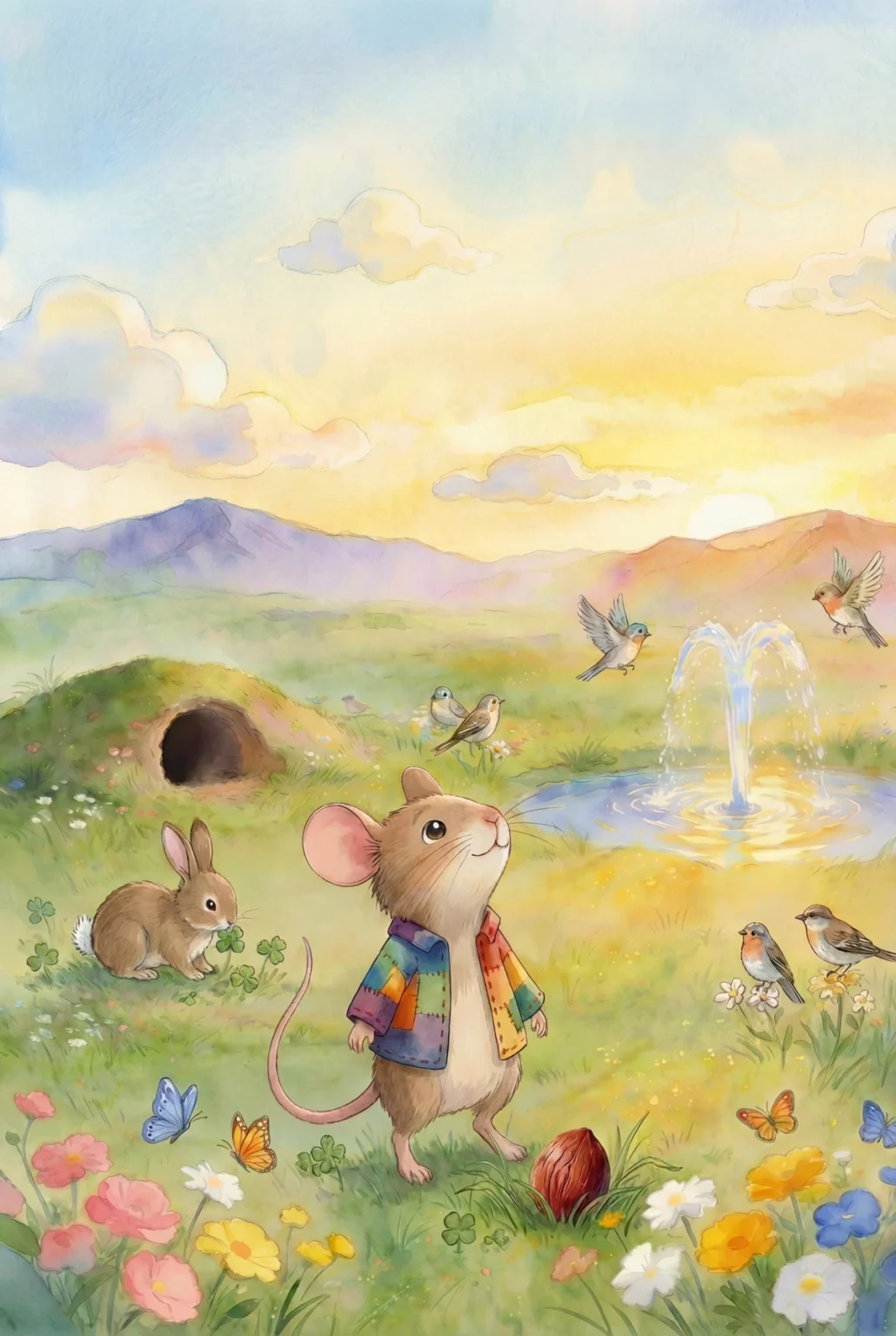
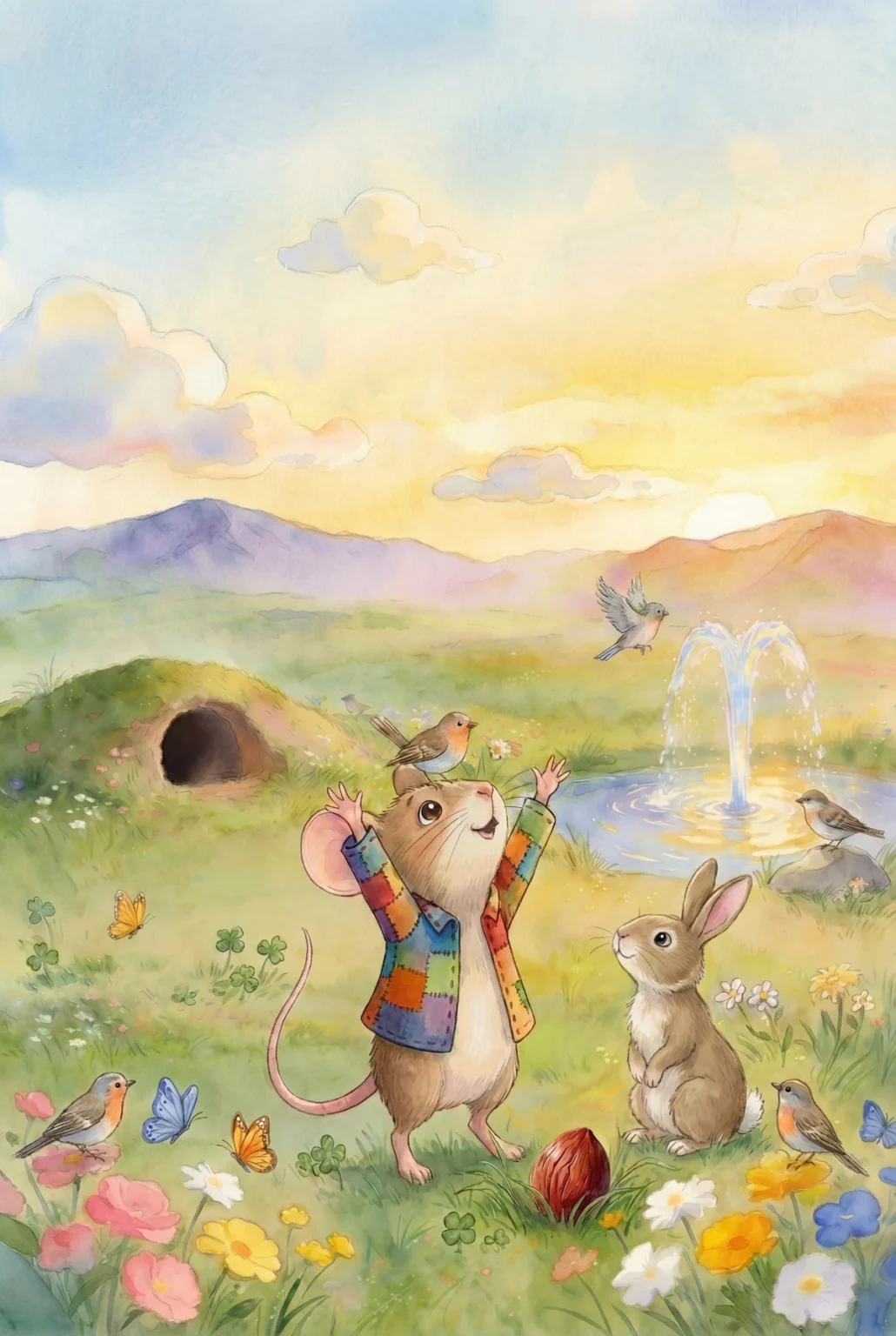
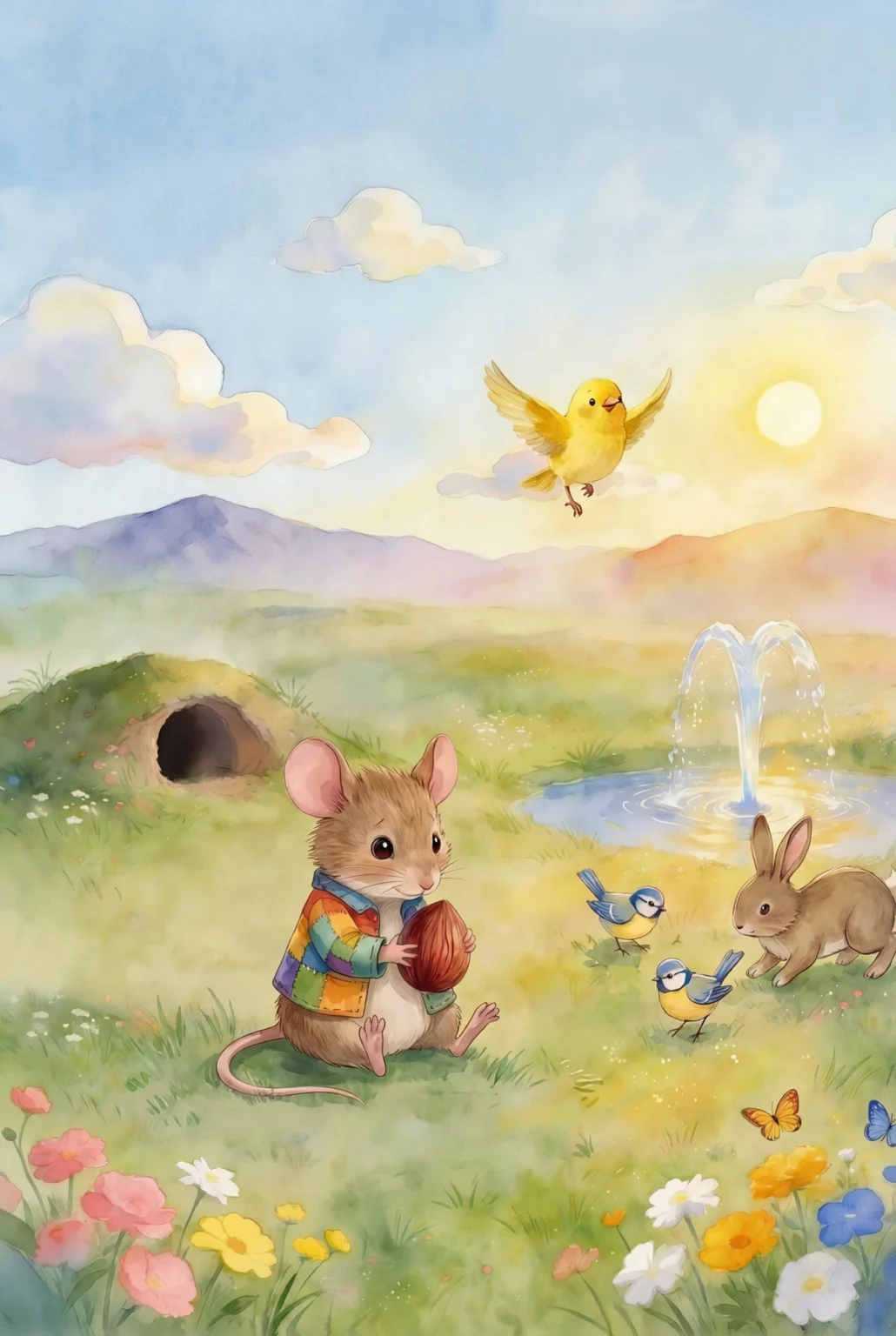
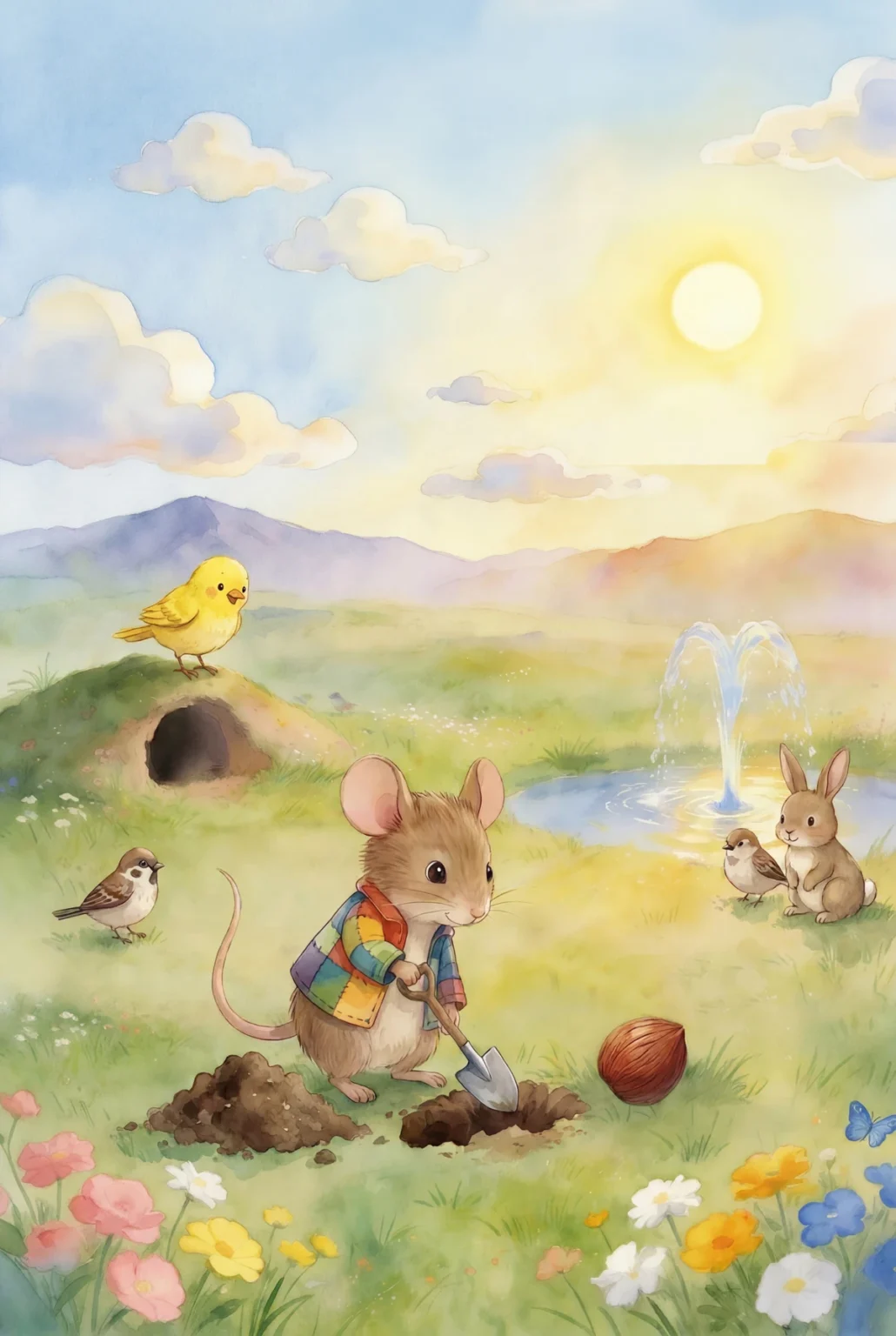
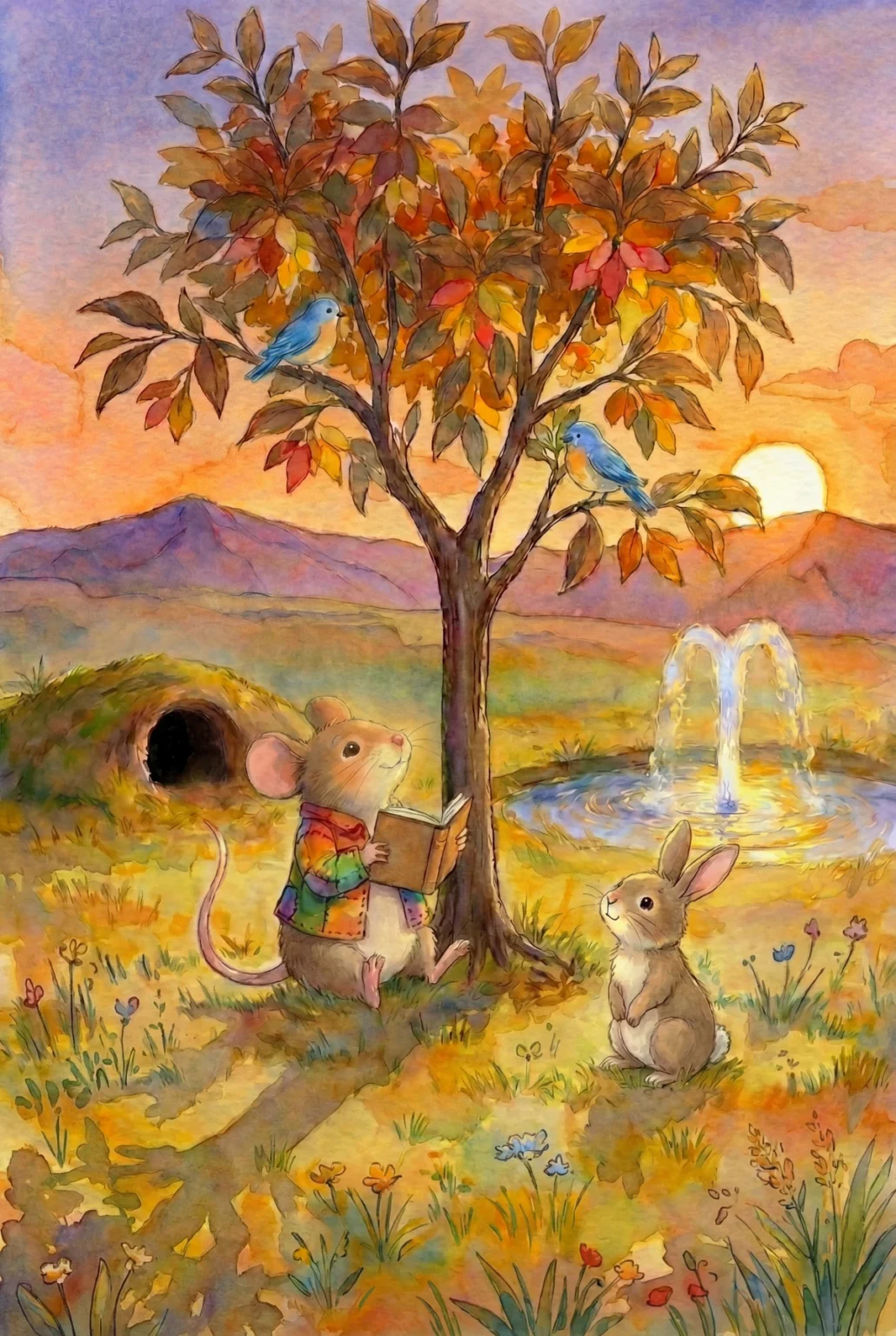
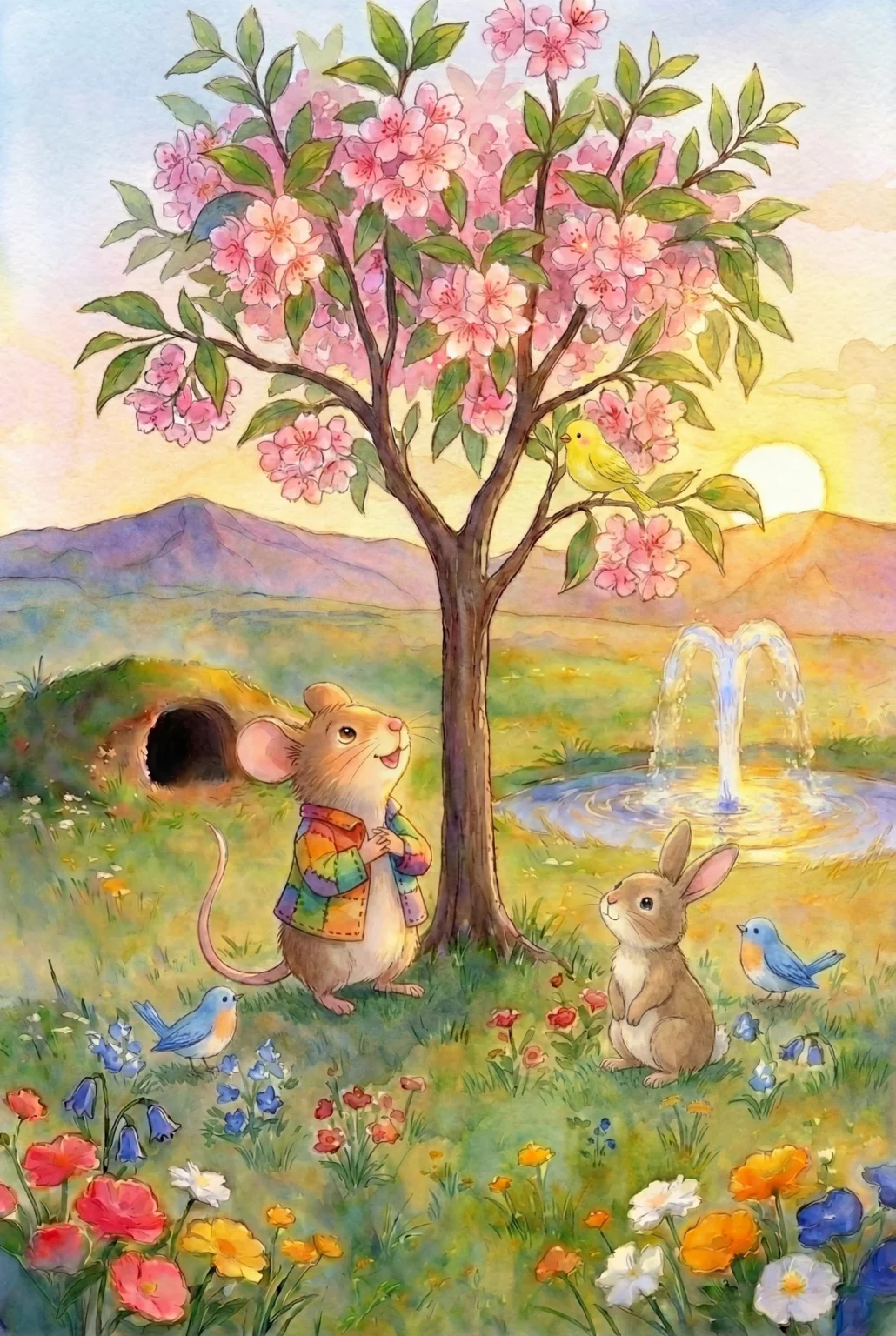
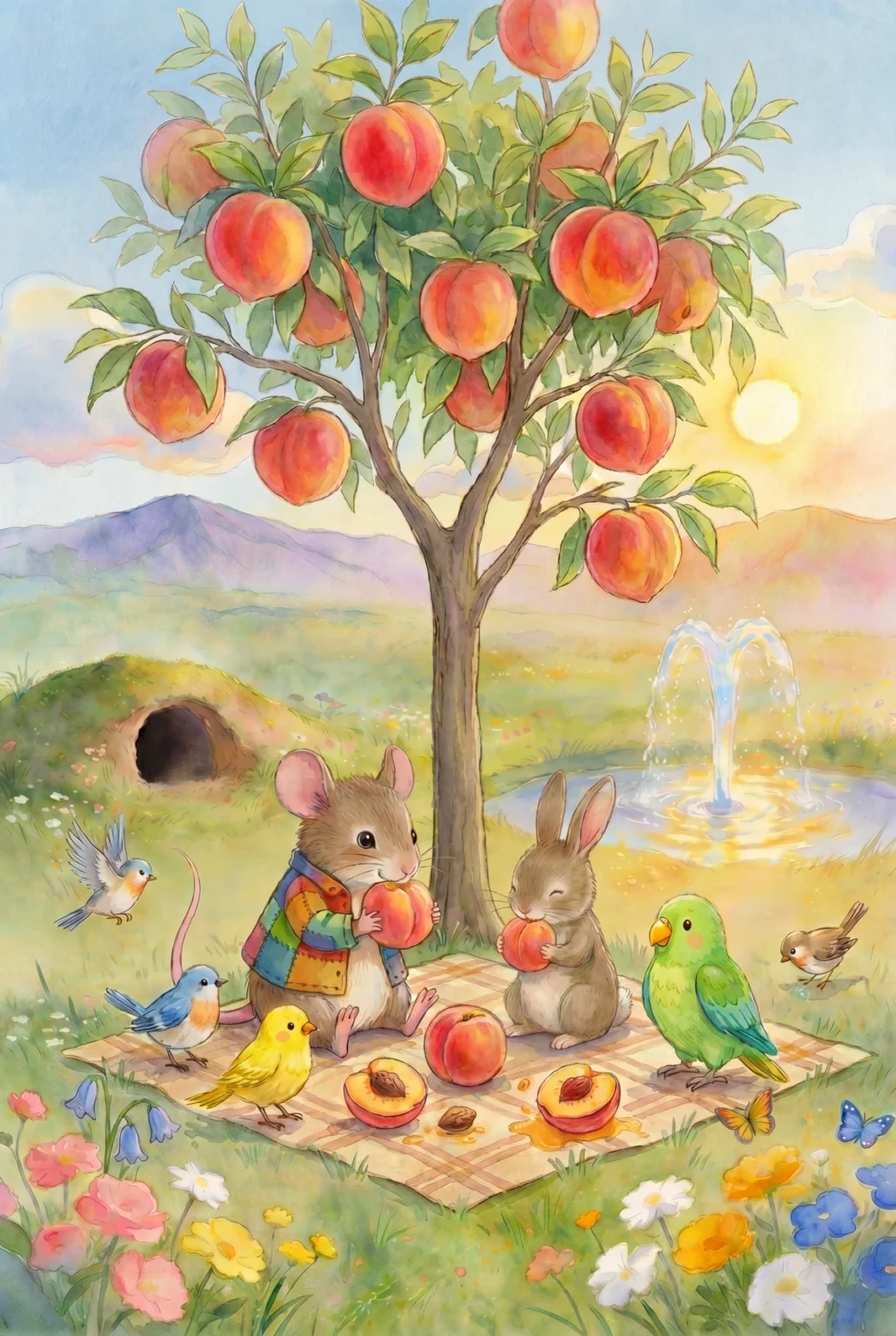
Read the first two pages from Mat and the Peach Pit
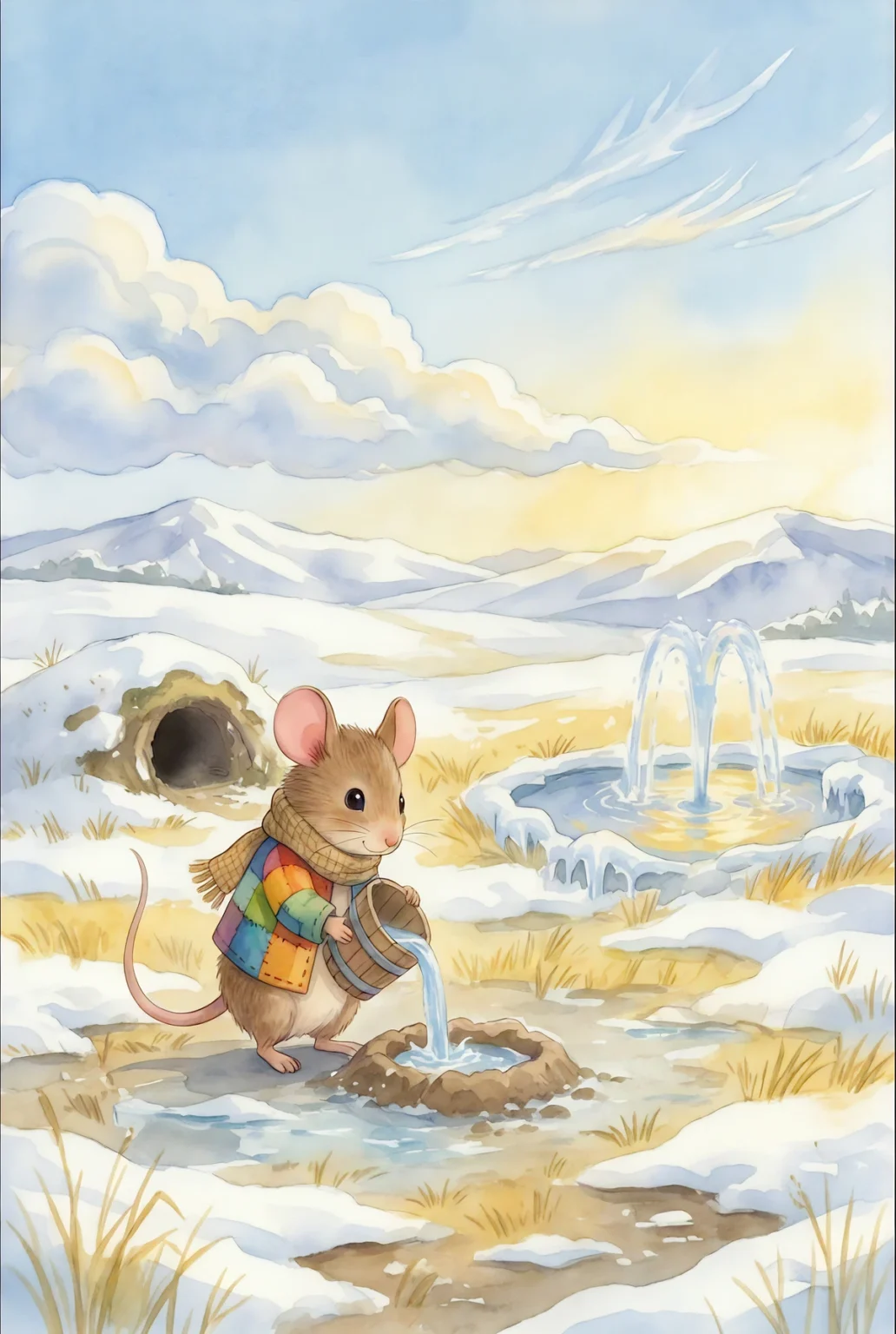
Mat was a very small mouse living on a very big farm.
Each morning he woke up in his safe little home under the earth. He put on his magic rainbow jacket that changed colours every so often. When Mat wore it, he felt brave enough to explore, curious enough to ask questions and clever enough to learn new things. The magic jacket did not give Mat the answers, but it helped him look very carefully and wonder about things. And usually, before long, the answers would come to him.
One morning, as usual, Mat climbed from below in his burrow to greet the world above. The air felt fresh and cool. Mat breathed in deeply. He looked up at the sky where clouds drifted lazily past. They were very far up above and even higher was Father Sun – too bright to look at. Then he looked down at the ground below – close, near and easy to see – and wondered how far apart the clouds, the sun and the earth must be?
“Is there always a higher and a lower?” wondered Mat. “…and is the bottom the end of lower and the top the end of higher?”
He nodded slowly, up and down, as if to test the end of lower and the top of higher. Then he lowered himself until his paws met the earth. He paused there. The ground received him, steady and unwavering. “I belong to the earth,” he said, wondering. Then he rose and stretched his front legs and paws upward, reaching into the open sky. His mind followed the movement through the air, past the clouds, toward the warmth of the sun and the distant shimmer of stars. His body followed, lengthening and opening.
“But I belong to the stars as well.”
He lowered himself again to touch the earth once more. He did this again and again. Down into the firmness of the earth. Up into the vastness above.
After a while, he paused, breathing deeply but not strained.
“It takes something to rise,” he said, with a note of reverence. “But it gives something back too.”
He stood there for a moment longer, filled with an inner strength that seemed to come from the movement itself.
Just then his friend Finn the finch flew by.
“Good morning, Mat!” called Finn as he made a fancy turn in the air before settling on the ground to peck at seeds.
Mat waved. “Good morning, Finn. Does everything that goes up always come down?”
“I certainly do!” laughed Finn before he took off again into the wide sky.
Mat followed Finn’s flight, filled with admiration and stepped forward without looking. It was then that he stumbled over something and fell down onto the soft grass.
He sat up and looked.
It was a peach pit!
…
Mat is a small mouse, and with his smallness come many challenges. He does not always know where he is going. He does not always understand what is happening around him. He often meets the world through effort, curiosity, uncertainty and not knowing. Yet, step by step, with the help of trusted friends and kind strangers, he finds his way.
Format: Print Quality PDF Download
+
Free Educator Guide
There is free accompanying Educator Guide included that offers teachers, parents and homeschoolers practical ways to carry the themes of Mat and the Peach Pit into lessons and everyday learning. It includes explanations of the mathematical ideas explored in the story, together with movement activities, games, artistic activities, discussion ideas and practical suggestions for helping children experience concepts such as up and down, above and below, direction, position, growth and change. In keeping with a Waldorf-inspired approach, the guide encourages these ideas to be developed first through story, movement, observation, imagination and artistic activity before they are drawn into more conscious mathematical understanding.
Also available on Amazon as a printed copy
Special Offer
For a limited time Mat and the Peach Pit is also included free with the purchase of The Quality of Numbers — Album & Songbook.
Author’s Note
Mat was born from a deep love of mathematics and story. It is inspired by Waldorf Education that has long understood that young children do not first meet the world through intellectual explanations. They meet it through image, rhythm, movement, wonder, imitation and actual physical experience. In Waldorf teaching, the arts and more specifically storytelling is integral to teaching throughout the primary school years to carry important lessons into the heart of the child before they are drawn into formal intellectual understanding. Only later, especially around Grades 6 and 7, does the more consciously analytical and abstract way of learning begin to unfold.
In my own studies and work with children, I began to notice a significant gap in the way mathematics is introduced in the early years. Waldorf Education already offers a richer and more imaginative approach than many systems, but even here I felt that something needed to be brought more fully into focus: a dedicated, conscious awakening of spatial awareness.
This does not only mean helping children move well with their bodies, although that is important. It also means helping them notice the space around them, name it, feel it and become awake to its qualities. Left and right. Near and far. Small and large. Top and bottom. Up and down. Around, underneath, above, beside, between. These are important words. They are some of the earliest actual roots of mathematical language.
A child who notices space begins to orient themselves in the world. A child who names space begins to think about relationship. A child who feels movement, direction, distance, sequence and change is already standing at the doorway of mathematical thought.
This awareness does not need to be taught in a dry or intellectual way. It can live in simple moments: the snail moving slowly across the path; the dog running fast in circles; the sun rising every morning in the same part of the sky; the child saying, “I am here.” It can live in watching water fill a bucket quickly when the tap is opened wide, or slowly when only a trickle comes through. It can live in seeing a cake rise in the heat of the oven, waiting for a kettle to boil, or discovering how long one can run before the body begins to tire.
Observing, noticing and naming these experiences are the very beginnings of mathematics.
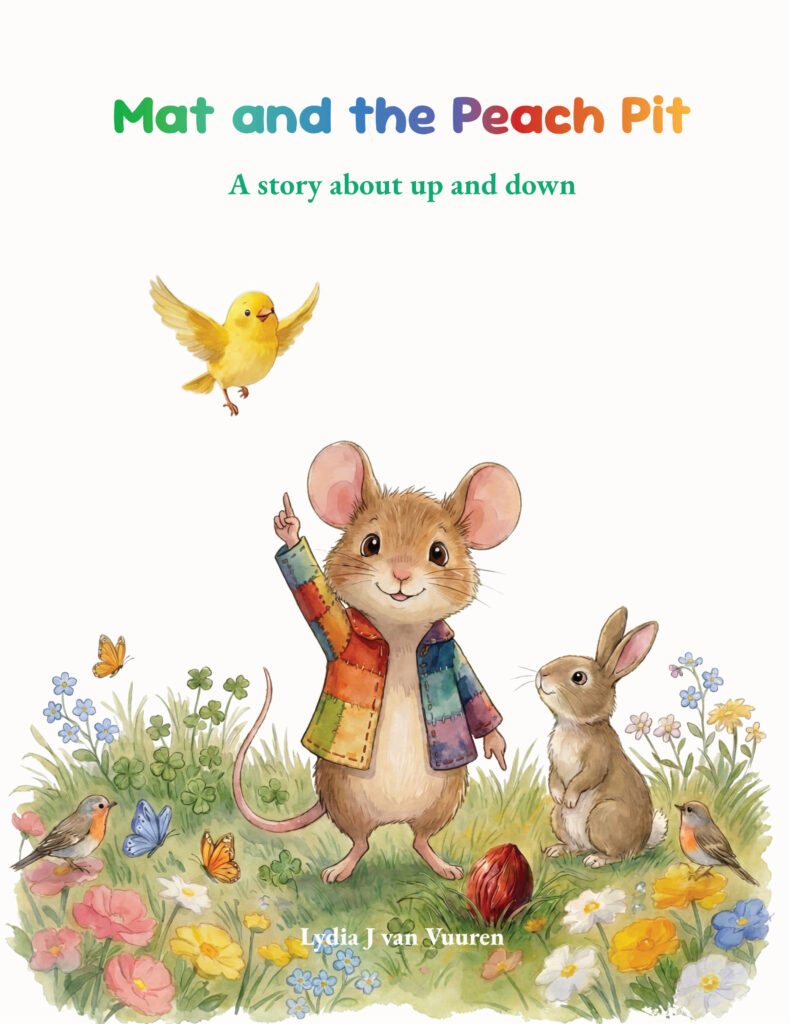
Mat, the Math Mouse is intended to become a series, with Mat and the Peach Pit – A Story About Up and Down as the first story in the series.
The second book, Mat and the World Around, is currently in development. It will continue Mat’s journey into spatial awareness, through ideas such as near and far, here and there, left and right, direction, orientation, landmarks and the four cardinal directions.
As the series grows, Mat’s adventures will help children notice the mathematical relationships already present in the world around them: position, movement, pattern, sequence, shape, change, order and spatial relationship.
By meeting these ideas first through meaningful stories, children can begin to build confidence, curiosity, spatial awareness and a more natural feeling for mathematical thinking. The aim is to help mathematics feel less like a set of rules to memorise and more like a way of seeing, moving through and understanding.